Shri Krishna Janmashtami Puja and Homa
 Saturday 5 September, 2026
Puja will be held at Shri Adinarayana Perumal Temple, Coimbatore, and you can experience from your home!
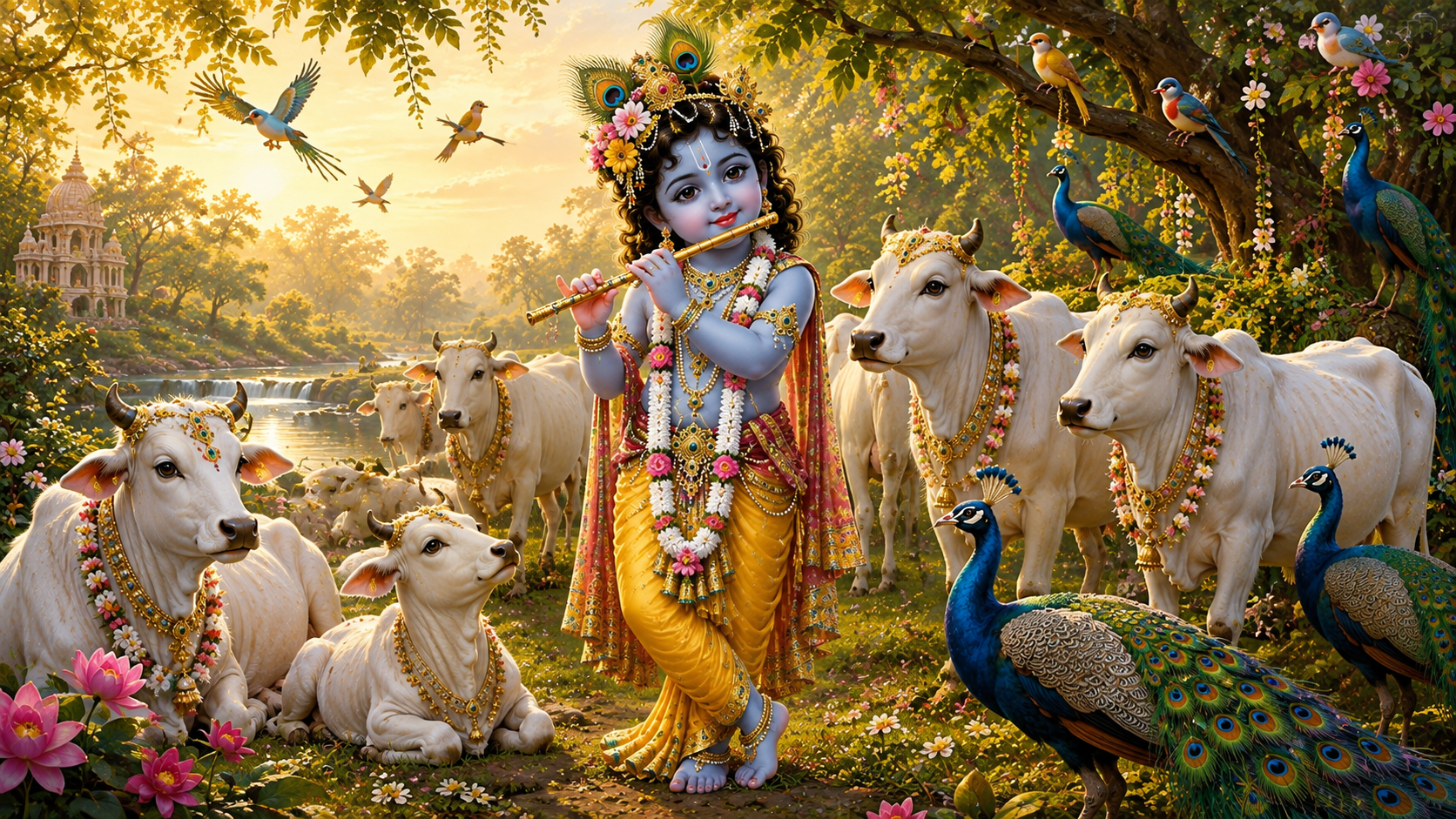
Shri Krishna Janmashtami celebrates the divine appearance of Bhagwan Shri Krishna, the eighth Avatar of Bhagwan Vishnu and the eternal guide of Dharma. On this sacred Ashtami Rohini tithi, join in Shri Krishna Homa performed with Sankalpa in your name and Gotra, and seek Krishna Krupa for protection, peace, family harmony and spiritual progress.
- Shri Krishna Homa: Vedic fire ritual with 108 chants of the Krishna Mantra for divine protection and Bhakti
- Panchamrut Abhisheka Seva: Sacred bathing ritual believed to bring purity, prosperity and Krishna Krupa
- Tulasi Pushpa Vishesha Alankara and Archana: Offering of Tulasi and flowers along with Shri Krishna Ashtakam Pathan for devotion and auspiciousness
- Vishesha Naivedya: Offering of sweet poha, coconut, phal, milk, curd and butter, followed by Mangalaarti, for family wellbeing and blessings for children

Vedic Significance

Divine Avatar Katha
Bhagwan Vishnu took the form of Shri Krishna as His eighth Avatar, appearing at midnight in Mathura as told in the Shrimad Bhagavata Purana.

Dharma Sthapana
As per Bhagavad Gita 4.7 to 4.8, Bhagwan manifests whenever Dharma declines, to protect the righteous and restore balance in the world.

Bhakti and Sankalpa
Janmashtami is a day of deep devotion, where Sankalpa, fasting, Krishna Katha and Naivedya bring the Sevakartha closer to Bhagwan Shri Krishna.

Agni and Mantra Shakti
Offering Krishna Mantra into sacred Agni during Homa carries prayers directly to Bhagwan, seeking Krishna Krupa for the Sevakartha and family.
Sevas we offer for Shri Krishna Janmashtami
Divine Story, Benefits, and Sacred Sevas of this Auspicious Puja
What is Shri Krishna Janmashtami
Shri Krishna Janmashtami marks the sacred appearance day of Bhagwan Shri Krishna, the eighth Avatar of Bhagwan Vishnu. The word "Janmashtami" comes from two words, "Janma" meaning birth and "Ashtami" meaning the eighth day. It is observed every year on the Ashtami tithi of Krishna Paksha in the month of Bhadrapada, when the Rohini Nakshatra is also present, the same combination under which Bhagwan Shri Krishna appeared in Mathura.
In 2026, Shri Krishna Janmashtami falls on 05 September 2026, coinciding with Bhadrapada Krishna Paksha Ashtami and Rohini Nakshatra. This alignment of tithi and nakshatra is considered especially auspicious for Puja, Homa and Vrata.
Shri Krishna Janmashtami is celebrated across India and among devotees worldwide under many different names. Some of the popular names for this festival are:
- Gokulashtami, popular in Maharashtra
- Krishnashtami, used across many regions
- Sree Jayanthi, common in South India, especially Kerala and Tamil Nadu
- Krishna Jayanti, a widely used alternate name
- Ashtami Rohini, referring to the exact tithi and nakshatra combination
Quick Facts
- Festival: Shri Krishna Janmashtami
- Date in 2026: 05 September 2026
- Tithi: Bhadrapada Krishna Paksha Ashtami
- Nakshatra: Rohini
- Deity: Bhagwan Shri Krishna, eighth Avatar of Bhagwan Vishnu
- Significance: Appearance of Bhagwan Krishna in Mathura to protect Dharma
- Key Practices: Fasting, midnight worship, Krishna Katha, Homa, bhajan and kirtan
- Also Known As: Gokulashtami, Krishnashtami, Sree Jayanthi, Krishna Jayanti, Ashtami Rohini
The Divine Birth of Shri Krishna
According to the Shrimad Bhagavata Purana, the city of Mathura was once under the harsh rule of King Kamsa. A divine prophecy warned Kamsa that the eighth child born to his sister Devaki and her husband Vasudeva would bring about his end. Fearing this prophecy, Kamsa imprisoned Devaki and Vasudeva, and one by one, took the life of each child born to them.
When the destined hour finally arrived on the Ashtami tithi of Bhadrapada Krishna Paksha, under the Rohini Nakshatra, Bhagwan Shri Krishna appeared before Devaki and Vasudeva inside the prison cell. The Bhagavata describes His appearance first in a divine four armed form, before He took the form of a small infant.
Through divine intervention, the prison guards fell into deep sleep, the chains binding Vasudeva loosened on their own, and the doors of the cell opened by themselves. Vasudeva carried the infant Krishna through a stormy night, crossing the river Yamuna, to the safety of Gokula. There, Bhagwan Shri Krishna was placed in the care of Nanda and Yashoda, who lovingly raised Him as their own son.
This marked the beginning of the Krishna Leela, the story of the playful child of Gokula who would later grow up to destroy Kamsa, protect His devotees, and, through the Bhagavad Gita, give humanity an eternal teaching on Dharma, Karma, Bhakti and spiritual wisdom.
The Deeper Meaning of Janmashtami
Bhagwan Krishna's birth in the darkness of midnight and within the confinement of a prison carries a beautiful spiritual message: even when fear, confusion and Adharma seem overwhelming, the Divine can manifest and show the way back to Dharma.
This idea finds its clearest expression in Bhagavad Gita 4.7 and 4.8, where Bhagwan Krishna explains that He manifests whenever Dharma declines, to protect the righteous, remove evil and restore balance in the world. This teaching is considered a central explanation for why Bhagwan Vishnu took the Avatar of Shri Krishna.
Sevas We Offer on Shri Krishna Janmashtami
On this sacred occasion, we offer a set of Sevas dedicated to Bhagwan Shri Krishna, performed with Sankalpa in the Sevakartha's name and Gotra. Each Seva is conducted with devotion, following traditional Vedic procedure.
- Shri Krishna Homa: A Vedic fire ritual performed with powerful chanting of the Krishna Mantra. The Mantra "Om Namo Bhagavate Vasudevaya" is chanted 108 times, offering prayers into the sacred Agni for Krishna Krupa, protection and family wellbeing.
- Panchamrut Abhisheka Seva: A sacred bathing ritual for Bhagwan Krishna performed with Panchamrut, a mix of milk, curd, honey, ghee and sugar. This Abhisheka is believed to bring purity, prosperity and the blessings of Bhagwan Krishna upon the Sevakartha and family.
- Tulasi Pushpa Vishesha Alankara: A special decoration of Bhagwan Krishna with Tulasi leaves and fresh flowers, offered as a mark of devotion and reverence.
- Tulasi Pushpa Archana: Ritual worship performed by offering Tulasi and flowers while chanting the names of Bhagwan Krishna, invoking His presence and blessings.
- Shri Krishna Ashtakam Pathan: Recitation of the Shri Krishna Ashtakam, a devotional hymn in praise of Bhagwan Krishna, chanted to deepen Bhakti and seek His grace.
- Vishesha Naivedya: A special offering made to Bhagwan Krishna consisting of sweet poha (beaten rice), coconut, seasonal phal (fruits), along with milk, curd and butter, His most beloved offerings since childhood in Gokula.
- Mangalaarti: The Seva concludes with Mangalaarti, where a lit lamp is offered to Bhagwan Krishna, marking the completion of worship with light and devotion.
Shri Krishna Homa Puja Process (Vidhi)
The Shri Krishna Homa is performed following traditional Vedic procedure, with each step carrying its own significance in the overall Puja.
- Sankalpa: The Puja begins with Sankalpa, a formal declaration made in the name and Gotra of the Sevakartha, stating the intention and purpose of performing the Seva. This step connects the Sevakartha directly to the ritual being performed on their behalf.
- Cleansing and Setup: The Puja area, Agni Kunda and ritual items are purified and arranged as per Vedic tradition, creating a sacred space for the Homa and Abhisheka to follow.
- Panchamrut Abhisheka: Bhagwan Krishna is bathed with Panchamrut, a combination of milk, curd, honey, ghee and sugar, accompanied by the chanting of Vedic mantras. This is followed by an Abhisheka with clean water to complete the ritual bath.
- Alankara and Archana: Bhagwan Krishna is adorned with Tulasi leaves and fresh flowers as part of the Vishesha Alankara. This is followed by Tulasi Pushpa Archana, where flowers are offered while chanting His names.
- Krishna Mantra Chanting: The principal Mantra, "Om Namo Bhagavate Vasudevaya", is chanted 108 times while offerings are made into the sacred Agni. This repeated chanting, combined with Sankalpa and Bhakti, forms the heart of the Homa.
- Shri Krishna Ashtakam Pathan: The Shri Krishna Ashtakam is recited, adding a devotional hymn of praise to the ritual and deepening the atmosphere of Bhakti.
- Naivedya: Vishesha Naivedya is offered to Bhagwan Krishna, consisting of sweet poha, coconut, phal, milk, curd and butter, His favourite offerings since His childhood days in Gokula.
- Mangalaarti: The Puja concludes with Mangalaarti, where a lit lamp is offered to Bhagwan Krishna, marking the completion of the Seva with light, devotion and gratitude.
Benefits of Shri Krishna Homa
Performing Shri Krishna Homa with Sankalpa and Bhakti on the sacred occasion of Janmashtami is considered an opportunity for the Sevakartha and family to seek the following blessings. It is important to remember that the focus of this Seva should remain on devotion itself, rather than on outcomes, since Bhagwan Krishna understands what each devotee truly needs.
- Krishna Krupa and Divine Protection: Prayers for Bhagwan Shri Krishna's protection and guidance over the Sevakartha and family
- Removal of Obstacles and Negativity: Seeking strength to overcome recurring difficulties, fear and discouragement
- Peace and Emotional Balance: Praying for a calmer mind, clarity and the ability to navigate life's challenges
- Family Harmony and Happiness: Seeking Krishna's blessings for love, understanding and harmony within relationships
- Blessings for Children: Families may especially pray for the wellbeing, good Samskara, intelligence and righteous growth of their children
- Wisdom and Right Decision Making: Bhagwan Krishna, as the giver of the Bhagavad Gita, represents clarity, Dharma and wisdom in moments of uncertainty
- Bhakti and Spiritual Progress: Mantra chanting directs the mind towards Bhagwan and deepens devotion, surrender and remembrance
- Dharma, Prosperity and Auspiciousness: Prayers for a righteous, meaningful and spiritually fulfilled life
Who Should Perform This Puja
Shri Krishna Janmashtami Homa can be performed by any devotee seeking Krishna Krupa, but it holds special relevance for the following:
- Devotees of Bhagwan Krishna: Those who wish to deepen their Bhakti and mark this sacred appearance day with heartfelt devotion
- Families Seeking Harmony: Sevakarthas praying for love, understanding and peace within their family relationships
- Parents Seeking Blessings for Children: Families wishing to pray for the wellbeing, good Samskara and righteous growth of their children
- Those Facing Confusion or Difficult Decisions: Sevakarthas seeking wisdom and clarity, drawing on Bhagwan Krishna's role as the giver of the Bhagavad Gita
- Those Facing Obstacles and Negativity: Devotees seeking strength and divine protection to overcome recurring difficulties
- NRI Sevakarthas: Devotees living abroad who wish to participate in this sacred Homa performed with Sankalpa in their name and Gotra, without needing to be physically present
- Those Seeking Spiritual Growth: Sevakarthas wishing to deepen their Bhakti, surrender and remembrance of Bhagwan through mantra chanting and ritual worship
Scriptural References
The traditions and teachings associated with Shri Krishna Janmashtami are rooted in several key Vedic texts:
- Shrimad Bhagavata Purana: The primary source for the Katha of Bhagwan Krishna's divine birth, His childhood in Gokula, and the story of Kamsa's tyranny and downfall. The Bhagavata Purana remains the most widely referenced text for Janmashtami celebrations across India.
- Bhagavad Gita: Spoken by Bhagwan Krishna Himself, the Gita's verses 4.7 and 4.8 explain the purpose of His Avatar, that He manifests whenever Dharma declines, to protect the righteous and restore balance. The Gita is also the source of Krishna's teachings on Dharma, Karma and Bhakti, central to His identity as a guide for humanity.
- Vishnu Purana: Provides context for Bhagwan Krishna as the eighth Avatar of Bhagwan Vishnu, situating His appearance within the broader tradition of divine Avatars taken to protect Dharma across different ages.
Why attend puja online with us?
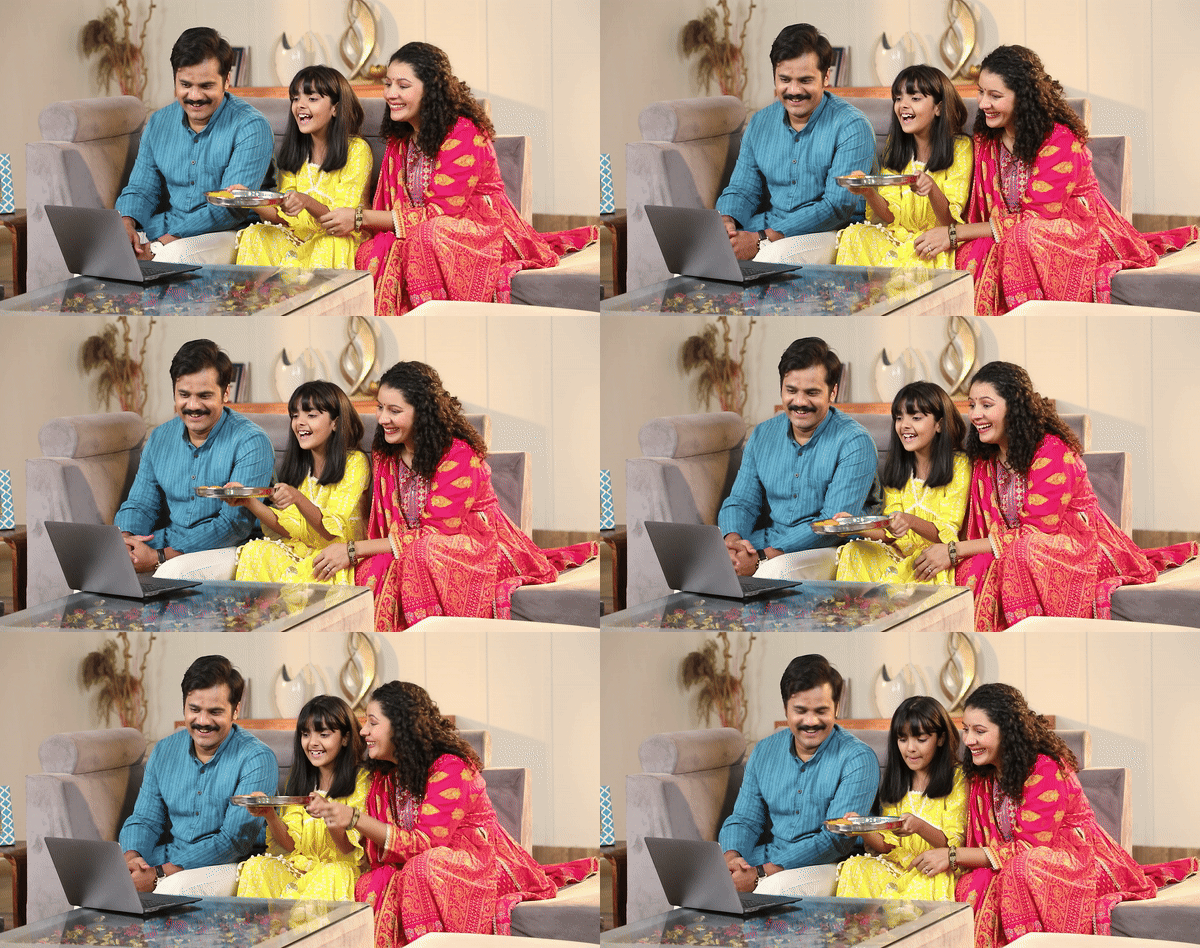
In the spiritual realm, physical boundaries hold no power, ensuring a connection between you and the divine.

Live Ritual Viewing
Experience the spiritual essence from the comfort of your home by tuning into live streams of the rituals performed by experienced priests.

Recorded Ceremony Video
If you miss the live event, a recorded video will be provided, allowing you to watch the sacred rituals at your convenience.

Free Prasad Delivery
Receive blessed prasad delivered directly to your home, ensuring you remain connected to the divine blessings.

Convenience
Participate in the rituals remotely without the need to visit the temple.

Spiritual Connection
Stay spiritually connected through live and recorded rituals, with blessings brought to you through prasad delivery.
How to book Shri Krishna Janmashtami puja
1
Choose your seva
Select one or more main rituals as per your spiritual need.
2
Choose offerings
Add optional offerings to deepen your spiritual experience.
3
Complete your booking
Confirm securely so all selected rituals and offerings are included.
Click Here To Book Puja
Book Your Shri Krishna Janmashtami Puja and Homa
Celebrate the divine appearance of Bhagwan Shri Krishna with heartfelt devotion. Book your Shri Krishna Homa and other Sevas today, performed with Sankalpa in your name and Gotra, and receive Prasad and a video of the ritual after completion. NRI devotees can book online without needing to be physically present.
Book Your Seva Now!!!
Frequently Asked Questions
1. When is Shri Krishna Janmashtami in 2026?
Shri Krishna Janmashtami falls on 05 September 2026, coinciding with Bhadrapada Krishna Paksha Ashtami and Rohini Nakshatra.
2. What are the other names for Shri Krishna Janmashtami?
This festival is also known as Gokulashtami, Krishnashtami, Sree Jayanthi, Krishna Jayanti and Ashtami Rohini, depending on the region.
3. Where is the Shri Krishna Homa performed?
The Shri Krishna Homa is performed at Shri Adinarayana Perumal Temple, Coimbatore, with Sankalpa taken in the Sevakartha's name and Gotra.
4. What does the Shri Krishna Mantra mean?
The principal Mantra, "Om Namo Bhagavate Vasudevaya", means "Salutations and surrender to Bhagwan Vasudeva, Shri Krishna." It is chanted 108 times during the Homa.
5. Why is midnight significant on Janmashtami?
Bhagwan Shri Krishna appeared at midnight in Mathura, so this hour is considered especially sacred for worship, remembrance and celebration.
6. Can NRI devotees book this Puja?
Yes. NRI Sevakarthas can book this Homa online, and it is performed with Sankalpa in their name and Gotra even without their physical presence at the temple.
7. Do I need to fast to participate in this Seva?
Fasting is a traditional part of Janmashtami observance, but it is not mandatory to book this Homa. The Puja is performed on behalf of the Sevakartha regardless of whether a personal fast is observed.
8. How do I choose which Seva to book?
Sevakarthas seeking Krishna Krupa through fire ritual and mantra chanting may choose the Shri Krishna Homa, while those wishing to include Abhisheka, Alankara and Naivedya can opt for the combined Seva. If you need help selecting, our team can guide you before booking.
Upcoming dates for Same Puja
25 August 2027
13 August 2028
1 September 2029