Vedic Astrology Remedies for Wellbeing and Long Life (Ayushya): A Balanced Guide
By: Pratima Argade
16 November 2026 at 1:50 AM
In Vedic astrology, remedies for wellbeing and long life, called Ayushya upayas, include a healthy lifestyle, mantra chanting, charity, loving service of parents and elders, prayers and Homams such as the Ayushya Homam and the Dhanvantari Homam. No remedy can promise a certain length of life. The wisest approach is simple, affordable and joined with good medical care.
Almost every family has, at some point, asked a Jyotishi, “Is there any remedy for long life?” The question usually comes from love. A parent is growing old, a child has been unwell, or a horoscope reading has left someone worried. In such a moment, the mind looks for something to do.
In this post, we will share a balanced view of Ayushya remedies. We will start with what Ayushya means in Ayurveda and Jyotish, and then look at the idea of fate and effort. We will go through the most common traditional remedies, with a clear view of which ones are simple and safe, and which ones need care. We have kept this post free of any dates so that it stays useful at any time. If you wish to know more about Bhagwan Dhanvantari, you can read our post on who Bhagwan Dhanvantari is.
What Does Ayushya Mean?
The word Ayushya comes from Ayus, which means life. In Ayurveda, the word has a beautiful meaning. The Charaka Samhita describes Ayus as the union of the body, the senses, the mind and the soul. It also speaks of four kinds of life, which are a happy life, an unhappy life, a beneficial life and a harmful life. This tells us that Ayurveda is not only interested in how long a person lives, but in how well and how meaningfully they live.
This is a very helpful way to look at Ayushya. A long life is a blessing when it is filled with health, kindness, purpose and peace. The old blessing “Jivema Sharadah Shatam”, which means may we live for a hundred autumns, is a prayer for such a life.
What Does Jyotish Say About Ayushya?
In Jyotish, the study of longevity is called Ayurdaya. The classical texts look at the Lagna and its lord, the 8th house and its lord, the Moon, the Sun, and Shani, who is called the Ayushkaraka, the planet linked with life span. We have explained the houses in our post on the 6th, 8th and 12th houses and health.
At the same time, we must be very clear. No honest astrologer can tell you how long a person will live. Methods of calculating life span exist in the texts, but they are complex, and they are not used by thoughtful Jyotishis to make statements about death. Please be wary of anyone who gives a number of years, or who predicts a death or a serious illness with certainty. This is not good Jyotish, and it is often used to create fear.
The right use of Ayurdaya is to understand which areas of life need care, and to take positive steps.
What Is the Relation Between Fate and Effort?
Indian philosophy has a long and rich discussion about daiva, or fate, and purushartha, which is personal effort. The Yoga Vasishtha is known for stressing the power of effort. It teaches that what we call fate is largely the result of our own past actions, and that sincere effort in the present is the key to a better future.
This idea is a good guide to remedies. A remedy is not a way to buy off fate. It is a way to build good habits, a calm mind, kindness and faith, and to use effort wisely. In the Jyotish tradition, upayas are seen as aids to effort, and never as a replacement for it.
What Are the Main Types of Remedies in the Tradition?
The classical idea of remedies is broad. Without going into technical details, these are the main groups that are commonly mentioned.
- Achara. A disciplined and healthy way of living, with good habits and right conduct.
- Japa. The repetition of mantras and names of Bhagwan.
- Daana. Giving to others, within one’s means.
- Seva. Loving service of parents, elders, the sick and the needy.
- Puja and Homa. Rituals of worship and fire offerings.
- Vrata. Observances and fasts.
- Yatra. Pilgrimage to sacred places.
- Ratna and Yantra. Gemstones and sacred diagrams. These need special care, as we explain below.
Among these, the first four are the simplest and the most within everyone’s reach.
What Is the Best Remedy for Long Life?
The best and most reliable remedy for long and healthy living is a healthy way of life. This is not an exciting answer, but it is a true one. In both Ayurveda and Jyotish, good habits are at the heart of Ayushya.
Keep a regular routine of sleep, meals and rest. Eat fresh and moderate food, in line with your doctor’s advice. Move your body gently every day, as your health allows. Go for your regular health check ups and take your medicines on time. Avoid tobacco, alcohol and other harmful habits. Drive carefully and follow safety rules. Keep stress in check with prayer, breathing and time with loved ones. See a doctor when you feel unwell, and do not delay.
You can read more about a simple daily routine in our post on Vedic ideas for wellbeing and strength.
How Do Mantras and Japa Help?
Mantra japa is one of the oldest and most loved remedies. It does not promise a length of life, but it brings calm, discipline and a sense of closeness to Bhagwan. A calm mind is a real support to good health.
Common mantras for Ayushya and wellbeing include the Maha Mrityunjaya mantra, “Om Tryambakam Yajamahe Sugandhim Pushtivardhanam, Urvarukamiva Bandhanan Mrityor Mukshiya Maamritat”, the Dhanvantari mantra, “Om Namo Bhagavate Vasudevaya Dhanvantaraye Amrita Kalasha Hastaya Sarva Amaya Vinashaya Trailokya Nathaya Dhanvantari Maha Vishnave Namah”, the Gayatri mantra, the Aditya Hridayam and the Vishnu Sahasranama. You can read about the first two in our posts on Dhanvantari Homam vs Maha Mrityunjaya Homam and on the Dhanvantari mantra.
Please let your priest or Guru advise on the form and the number of repetitions. A few minutes each day, kept with regularity, is better than a large number done only once.
How Do Daana and Seva Help?
The tradition places great value on giving and service. A simple act of kindness is said to carry a deep blessing. These are some meaningful forms of daana and seva.
Serve your parents and elders with love. Spend time with them, take care of their health and listen to them. In Jyotish, Surya and Chandra are linked with the father and the mother, and loving service of parents is seen as one of the best remedies. Offer food to the hungry, which is called annadana. Support the medical care of someone who cannot afford it, or donate to a hospital or a charity that you trust. If you are eligible and your doctor agrees, donate blood at an accredited centre. Care for animals and plants. The Puranas praise the planting of trees, and today this is a fine way to give life to the world around us. Treat those who work for you with respect and fairness.
Please give only within your means. The value of daana lies in sincerity, and not in size.
What Are Ayushya Homam and Other Homams?
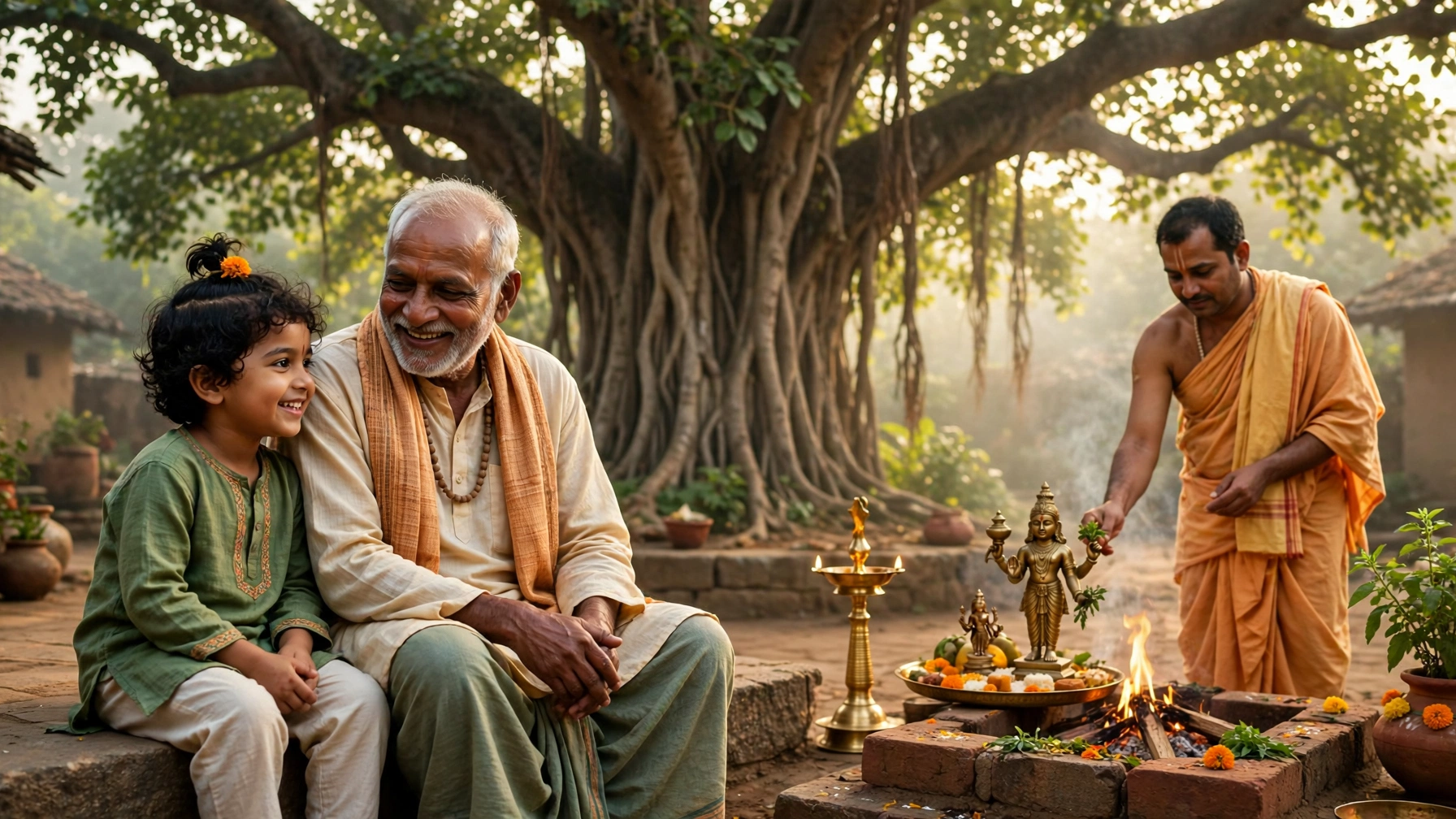
Homams are Vedic fire rituals performed to seek blessings. The Ayushya Homam is performed with mantras for long life, often on birthdays and milestone ages such as Shashtipurti. The Dhanvantari Homam honours Bhagwan Dhanvantari and is performed to seek blessings for health, strength and peace of mind. The Maha Mrityunjaya Homam honours Bhagwan Shiva and is performed to seek protection and courage. Our posts on Dhanvantari Homam vs Ayushya Homam vs Sudarshana Homam and Dhanvantari Homam vs Maha Mrityunjaya Homam explain the differences.
In each, the priests take a Sankalpa in the name of the person, along with their gotra and nakshatra. A Homam is a form of spiritual support. It does not promise a length of life, and it works alongside medical care. Families often combine the Homam with a simple home prayer on the day of their birth nakshatra. You can read about this in our post on Janma Nakshatra and health.
What Remedies Are Linked With Specific Grahas?
Some Jyotishis suggest remedies based on the horoscope, such as prayers on the day of a particular graha, or mantras for the grahas that seem to need support. We have explained the most common ones in our posts on the planets and health, Shani and health, Rahu and Ketu, Mangal, Surya and Chandra, and Mahadasha and Antardasha periods.
The general principle is simple. The remedy for a graha is mostly the worship of its deity, the mantra for it, and the kind of seva that suits its nature. Please let a trusted Jyotishi look at your full chart before you adopt any such practice.
How Can We Keep Vrata and Pilgrimage Safe?
Vrata, or fasting, is a part of devotion for many families. Please speak to your doctor before fasting, especially if you have any health condition, are pregnant, are elderly or take regular medicines. Devotion does not depend on hunger, and a gentle fast, or a simple prayer, is often better than a strict one.
Pilgrimage is also a source of great joy. For elders and those with health concerns, please plan carefully, ask the doctor, choose easy routes and travel at a relaxed pace. A temple visit close to home, or a prayer in the home shrine, is as dear to Bhagwan as a long journey. We have given more ideas in our post on prayers for elderly parents.
Which Remedies Need Extra Care?
Some remedies call for special caution, and this is where many families are misled.
- Gemstones. Stones such as ruby, pearl, red coral, blue sapphire and others are powerful in the tradition and do not suit everyone. They are often sold at very high prices. Please do not wear one without careful advice from a trusted Jyotishi, never spend beyond your means, and never use a gemstone in place of treatment.
- Yantras and amulets. These are often sold with big claims. Please be careful, and do not rely on them for health.
- Costly or secret rituals. Please be cautious about any ritual that is very expensive, is said to be a secret, or must be done immediately.
- Fear based advice. Please walk away from anyone who predicts a death, a serious illness or an accident with certainty, who says that your family is cursed, who demands large payments, or who asks you to stop medicines or avoid doctors. Honest Jyotishis do not do this. If you feel pressure or fear, take a pause, speak to a trusted person and speak to your doctor.
How Can You Build a Simple and Balanced Remedy Plan?
Here is a gentle way to put all this together, without cost or pressure.
- Begin with health. Take care of your routine, your check ups and your safety habits.
- Add a small daily prayer. Light a lamp and chant a mantra for a few minutes each day.
- Choose one act of seva. Spend time with an elder, help someone in need, or plant a tree.
- Mark your nakshatra day. Use your Janma Nakshatra day each month for a prayer and a health check in.
- Consider a Homam on special occasions. A birthday, a milestone age, a time of worry or a thanksgiving can be a good occasion.
- Ask for guidance. If you want a remedy based on your chart, speak to a trusted Jyotishi and ask them to keep it simple.
How Should We See Astrology and Medical Care Together?
Astrology and the Homam are forms of spiritual guidance and support. They are not a replacement for medical advice, diagnosis or treatment. They do not promise any result or a length of life, and they should never delay or replace the care of a doctor.
The best way to see them is as companions to good care. The doctor treats the body, the family looks after the person, and Jyotish and prayer give reflection, hope and calm to the mind. Please continue to follow your doctor’s guidance, and never stop or change a treatment because of an astrological remedy.
Key Takeaways
- Ayushya in Ayurveda is about a happy, healthy and meaningful life, and not only about its length.
- No honest astrologer can predict how long a person will live, and anyone who does should be avoided.
- Remedies are aids to effort, and the best remedy is a healthy lifestyle with regular check ups.
- Simple and affordable remedies include mantra japa, daana, seva of parents and elders, tree planting and a monthly nakshatra day prayer.
- Homams such as the Ayushya, Dhanvantari and Maha Mrityunjaya Homams are spiritual support on special occasions.
- Be careful with costly gemstones, yantras and fear based advice, and never stop medical care because of a remedy.
Frequently Asked Questions
Q. What is the best remedy for long life in astrology?
The best remedy is a healthy and balanced way of living, with good habits and regular check ups. Prayer, mantra japa, daana and seva of parents and elders are also valued in the tradition.
Q. Can astrology predict how long someone will live?
No. No honest astrologer can predict the length of a life. Please be wary of anyone who gives a number of years or predicts a death.
Q. Which mantra is chanted for long life?
Many people chant the Maha Mrityunjaya mantra, the Dhanvantari mantra, the Gayatri mantra and the Vishnu Sahasranama. Please let your priest or Guru advise on the form and the number.
Q. What is Ayushya Homam?
It is a Vedic fire ritual performed with mantras for long life, often on birthdays and milestone ages. It is spiritual support and does not promise a length of life.
Q. Should I wear a gemstone for long life?
Gemstones do not suit everyone and are often sold at a high price. Please do not wear one without careful advice from a trusted Jyotishi, and never use a gemstone in place of treatment.
Q. How can I avoid being cheated by fear based remedies?
Walk away from anyone who predicts death or illness with certainty, demands large payments, calls a ritual a secret or urgent, or asks you to avoid doctors. Speak to a trusted person and your doctor.
A Note on Health and Faith
Astrology, prayer and the Dhanvantari Homam are forms of spiritual guidance and support. They are not a substitute for medical advice, diagnosis or treatment. Please continue to follow your doctor’s guidance and take care of your health along with your prayers.
Seek the Blessings of Bhagwan Dhanvantari
If you wish to pray for the health and wellbeing of your family with the full Vedic method, you can book the Dhanvantari Homam with Jyotirgamaya from anywhere in the world. Visit the Dhanvantari Homam page.